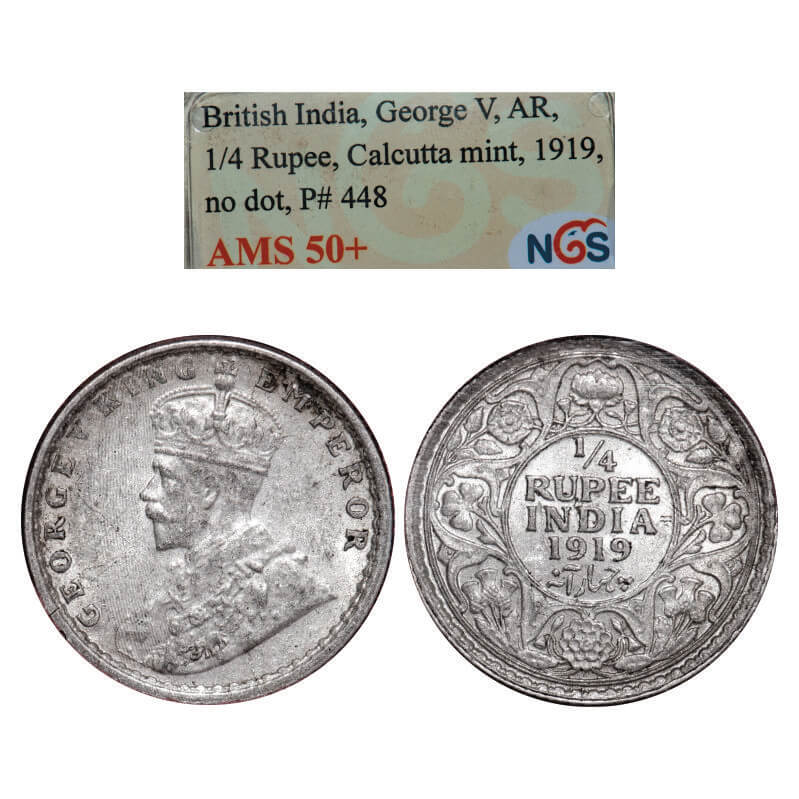
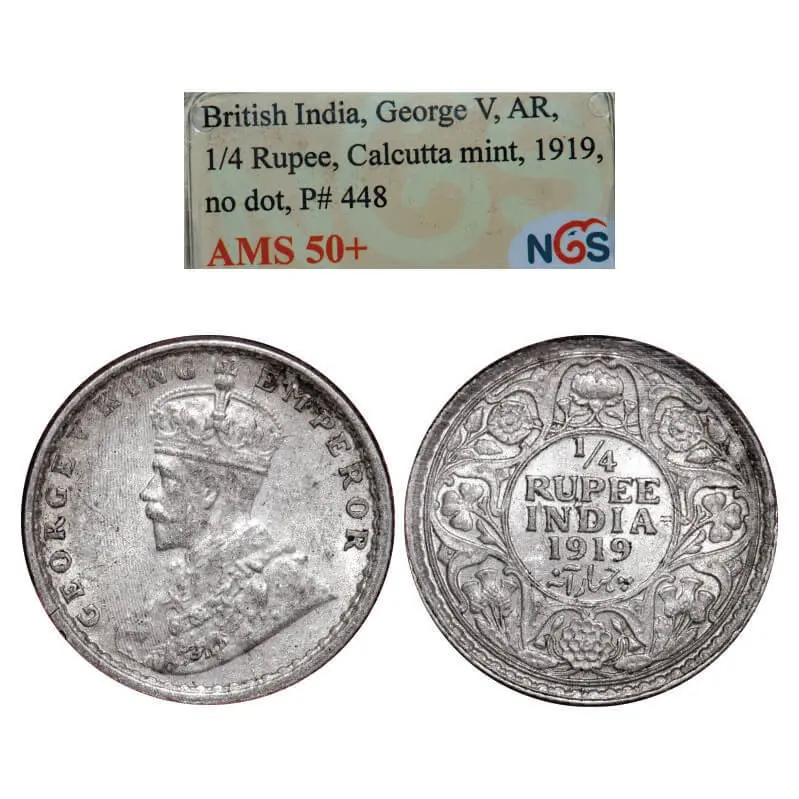
George V, Silver, 1/4 Rupee, 1919, Calcutta Mint, No dot. GK1092. NGS Slabbed AMS 50. Scarce.
George V Silver ¼ Rupee 1919, Calcutta Mint (No dot variety) (GK 1092) is a British India fractional coin struck in .917 fine silver as part of the pre-decimal currency system widely circulated across the Indian subcontinent during the post–First World War period. The obverse features the crowned and draped bust of King George V with imperial inscriptions, while the reverse displays the denomination “Quarter Rupee” within a floral wreath along with the date and Calcutta Mint attribution, here identified by the absence of a dot variety.
This issue belongs to the wartime and immediate post-war silver fractional series, which formed an essential part of everyday monetary transactions in colonial India. The ¼ rupee denomination served as an intermediate value between annas and the full rupee, and Calcutta Mint issues from this period are commonly encountered in circulation grades, with higher preservation examples being more selectively collected.
The example graded NGC AU50 (sometimes recorded as AMS 50 in slab notation) is an About Uncirculated specimen showing moderate wear on the highest points with partial remaining mint luster, placing it just below Mint State condition. Its “Scarce” designation reflects moderate availability overall, with better-preserved no-dot Calcutta Mint varieties being more desirable in advanced British India fractional silver collections.